How a leading polytechnic created one connected model for learners and employers that adapts as workforce needs evolve.
About SAIT Continuing Education & Professional Studies

“We did not build a corporate training system. We built a lifelong learning ecosystem where corporate training naturally fits.”
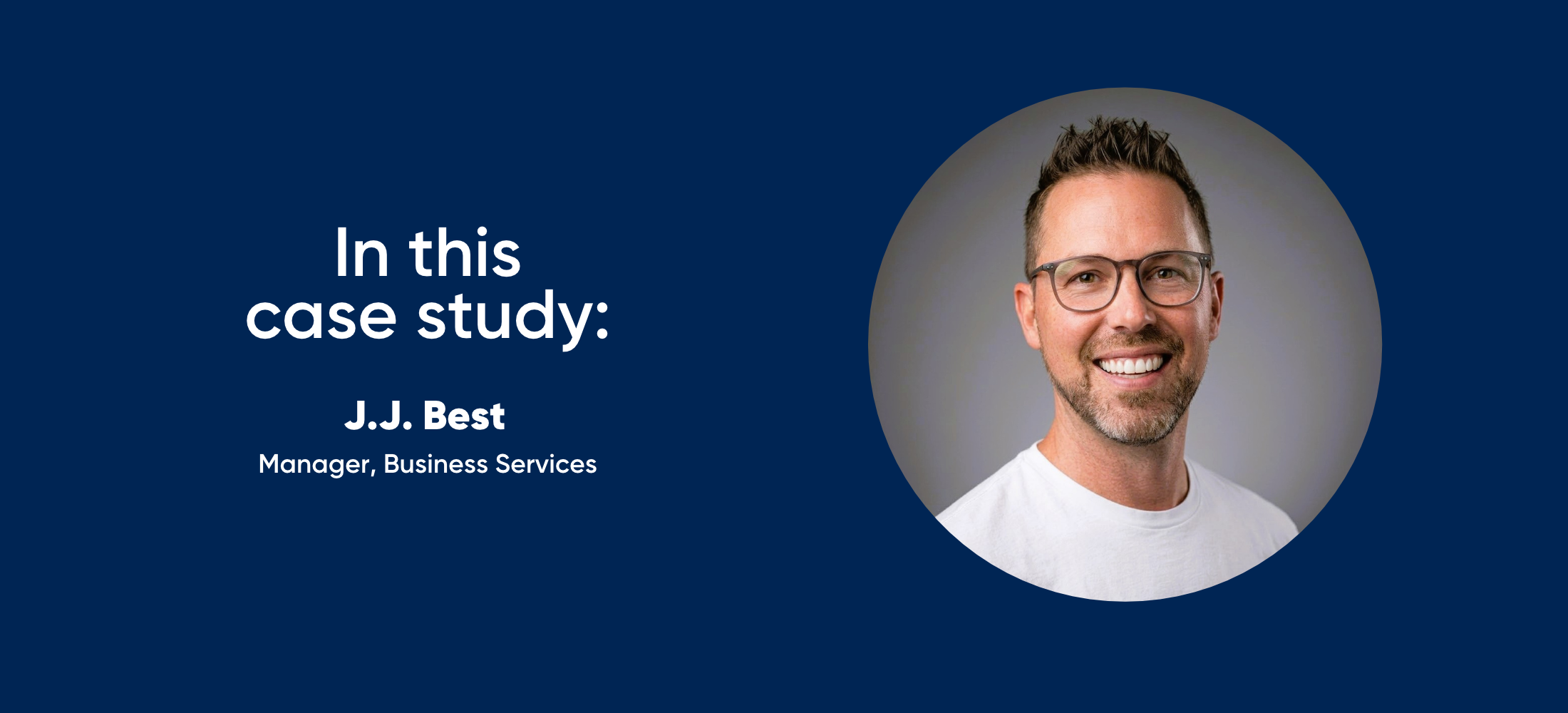
J.J. Best | Manager, Business Services at SAIT Continuing Education and Professional Studies
The Challenge
Founded in 1916, the Southern Alberta Institute of Technology (SAIT) is one of western Canada's leading polytechnic institutions, with a long tradition of preparing learners for careers through applied, industry-connected education.
Today, SAIT's Continuing Education & Professional Studies division extends that mission beyond traditional academic programs, delivering flexible learning that responds to employer and industry needs.
As workforce needs evolve, the division has faced rising expectations. It must respond to fast-changing workforce demand, drive revenue growth, expand learning opportunities, and grow corporate partnerships—all while delivering an exceptional learner experience.
Meeting these challenges has meant rethinking how people, processes, and technology work together across the division. As the division expanded its efforts with corporate partners, the need for that work became especially clear.
“At the beginning of that journey, corporate training looked very different from everything else we did,” said J.J. Best, Manager of Business Services. “We had different processes, tools, records, and ways of working.”
A corporate training request might begin with an email, move into a spreadsheet, then another spreadsheet. Contracts lived in Word documents. Files were stored on shared drives. Every new engagement required manual setup before training could finally begin.
“There were lots of very talented people and lots of hard work, but very little standardization,” said Best.
That experience ultimately led the team to question a fundamental assumption. Rather than creating a separate model for corporate training, the team began asking how it could manage learning regardless of who pays.
“It sounds simple, but it fundamentally changed how we thought about our organization, our processes, and our systems,” Best said.
The Solution
Modern Campus Lifelong Learning gives SAIT the shared foundation it needs to bring learning into a single ecosystem. Instead of relying on disconnected processes, the division now connects courses, learner records, registration and credential pathways through one shared platform.
That shared foundation now supports multiple delivery models. When a corporate client requests training, the division no longer relies on a separate process. Instead, it combines existing learning with employer-specific content, keeping every learner connected to the same records and credential pathways.
For the first time, employers have a direct role in the learning experience. Rather than managing training through email and spreadsheets, corporate partners engage directly using Modern Campus's Corporate Engagement Manager Module as part of the same ecosystem.
Employers can register employees, monitor learner progress and access reporting through dedicated employer tools, while employees can track their own learning and credential progress directly.
“The biggest surprise was how much they valued self-service,” said Best.
Today, teams are organized around industry sectors instead of delivery models, giving learners and employer partners one team that understands their industry, regardless of how they engage with SAIT.
Together, these changes give SAIT a repeatable model for responding to changing workforce needs without creating a new way of working each time.
“The scale that we've been able to achieve wouldn't have been possible without Lifelong Learning, as well as the corporate engagement module.”
J.J. Best
The Results
Employers became active participants in the learning experience
Rather than waiting on emails or manual updates, employers now have direct visibility into learner progress through self-service tools. The result is a more collaborative relationship, with organizations able to participate directly in managing training instead of simply receiving it.
“It's exactly what success should look like. Technology fades into the background and just makes things easier.”
J.J. Best
Every learner stays connected, regardless of who pays
Whether learners enroll independently or through an employer, they move through the same learning experience. Their progress stays connected over time, making it easier to keep working toward credentials.
This consistency supports learners as their goals evolve. Each new learning opportunity builds on the last, regardless of how they access training.
New partnerships no longer require new ways of working
Industry-aligned teams now support learners and employer partners through one shared approach, allowing the division to take on new partnerships without creating new teams or processes for each engagement.
“Rather than maintaining separate groups for different revenue streams, we now focus on providing one coordinated view of an industry sector,” said Best.
What’s next
SAIT continues to build on the operating model it has established. Next, the division will focus on enhancing corporate engagement, expanding employer self-service, strengthening skills pathways and building a more connected workforce ecosystem.
“Technology enabled the change. The operating model is what made it, and continues to make it, sustainable.”
J.J. Best