How Texting Supports Retention: 2026 SMS Strategies for Higher Education
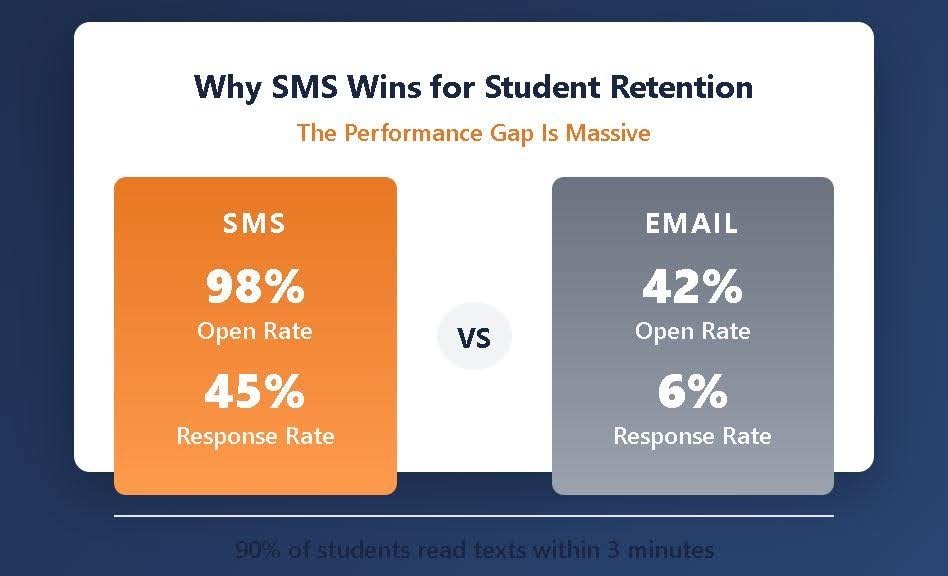
Texting supports retention by meeting students where they are, with 98% open rates and 45% response rates that far outpace email.
- Students who engage in text messaging programs show higher GPAs and persistence rates than non-participating peers.
- Two-way conversational texting uncovers roadblocks before they derail a student's academic journey.
- AI-powered personalization enables institutions to deliver the right message at the right time, at scale.
If your retention strategy relies primarily on email, you're missing students who need your support.
Students face complex challenges that threaten their ability to stay enrolled. Financial pressures, academic uncertainty and feeling disconnected from campus resources all contribute to the sobering reality that nearly one in four students don't persist past their first year. The key to supporting student success lies in reaching learners through the channels they actually use.
Your outreach efforts won't move the needle on engagement if recipients never see your messages. The majority of students no longer read most of their emails. Email averages a 42% open rate, meaning if you rely on email alone, only two in five students will read your messages. For institutions serious about improving retention, communication tech needs to evolve beyond traditional channels. Student communication preferences have changed, and institutions need to adapt.
Why Does Texting Support Retention Better than Email for Student Engagement?
Learners live on their phones. Research shows that 84% of consumers have opted in to receive texts from businesses. For college students specifically, texting dominates daily communication habits.
The performance gap between SMS and email is substantial. Text messages achieve a 98% open rate compared to email's 42%. But open rates only tell part of the story. The real differentiator is engagement. SMS campaigns achieve a 45% response rate while email languishes in the single digits. When a student is struggling with registration, confused about financial aid or considering dropping out, waiting days for an email response isn't realistic. Text messaging enables real-time intervention that can literally save a student's academic career.
Speed matters in retention efforts. Approximately 90% of Gen Z students read text messages within five minutes of delivery, compared to an hours-long response time for email. When FAFSA deadlines loom or registration windows close, students need information immediately.
The intimate nature of texting also builds trust differently than email. Text messages land in the same inbox where messages from friends and family appear. This proximity creates opportunities for genuine relationship-building that mass email blasts can't replicate.
What Are the Top Benefits of Texting for Student Retention?
Many colleges and universities have seen remarkable success using text messaging to connect with learners and advance their retention strategies. The evidence spans institution types, student populations and use cases.
Kellogg Community College used texting to drive immediate student action. When staff texted waitlisted students about open course sections, 65% registered for an available seat within 24 hours. Texts about tuition grant eligibility produced even more dramatic results: one hundred students submitted applications within an hour of receiving a single message. These swift responses help students stay on track toward graduation while connecting them to critical financial resources.
The Austin Community College District focused its texting efforts on financial literacy and deadline awareness. By sending students reminders about financial aid deadlines, upcoming workshops and money management tips, they increased persistence among part-time students by 15%. Part-time learners often face the greatest risk of stopping out, making this population particularly important to reach.
Brigham Young University took a different approach, leveraging texting to power peer mentorship. Older students text first-year learners through a structured program designed to build connections and provide guidance. This approach demonstrates that texting amplifies one-to-one relationships rather than replacing them.

Institutions that implement strategic texting programs consistently report improvements in retention metrics, student satisfaction and operational efficiency. The channel works because it aligns with how students naturally communicate.
How Should You Personalize Text Messages at Scale?
The most effective text messages feel personal, relevant and timely. Recipients are more likely to engage with communication when it addresses their specific situation. Generic mass messages get ignored. Personalized outreach builds trust.
Personalization includes obvious elements like using the student's name, but it extends much further. Consider the difference between these two approaches:
Generic messaging: “Get ready. Course registration begins soon for most students.”
Personalized messaging: “Julian, course registration for second-year business majors like you opens in 4 days, Tuesday 5/21 at 9 am. Here's the link to register.”
The second message provides actionable information tailored to that specific student's circumstances. It acknowledges Julian as an individual navigating a unique path. This approach transforms institutional communication from one-way announcements into supportive guidance.
Effective personalization requires integration with your existing student data systems. When your texting platform connects with CRM or SIS data, you can segment audiences and build targeted communications based on major, year, financial aid status, engagement history and dozens of other variables. A first-generation student approaching a FAFSA deadline needs different support than a returning adult learner exploring continuing education options.
The goal is to ensure students view your communication as genuinely helpful rather than institutional noise. When learners understand that texts serve their interests, response rates climb and relationships deepen.
What SMS Features Matter Most in 2026?
Communication tech for higher ed has evolved. The SMS platforms serving institutions today bear little resemblance to basic mass texting tools from a decade ago. Understanding current capabilities helps institutions make informed decisions about their retention infrastructure.
AI-Powered Automation and Personalization
Artificial intelligence has transformed what's possible in student communication. Modern platforms use AI to analyze student data, identify optimal message timing and personalize content at scale. Research indicates that 81% of organizations report improved SMS performance after implementing AI tools. Leading use cases include:
- Analyzing student data for targeting
- Personalizing messages based on behavior, and
- Optimizing send timing to maximize engagement
AI also enables intelligent routing of student inquiries. Routine questions receive instant automated responses while complex concerns escalate to appropriate staff members. This approach ensures students get immediate support for straightforward needs while preserving human attention for situations requiring empathy and nuanced guidance.
Two-Way Conversational Messaging
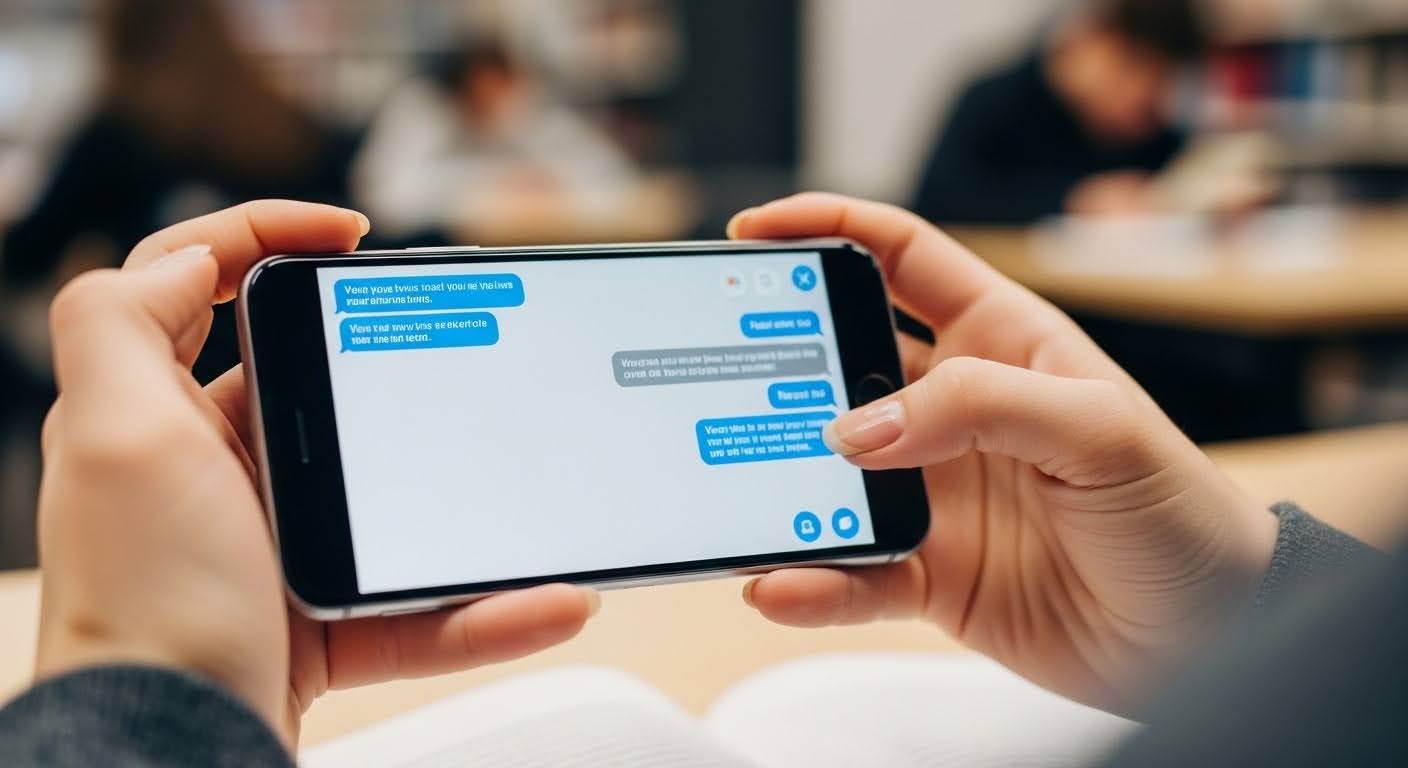
The shift from broadcast messaging to genuine dialogue is a fundamental change in how texting supports retention. Two-way conversational messaging creates space for students to ask questions, express concerns and receive guidance through the channel they prefer.
When students can reply to texts at their own pace, barriers to seeking help drop. A student who would never visit an advisor's office might readily text a question about course selection. That initial exchange opens doors to deeper support and stronger institutional connection.
Integration with Campus Systems
Effective SMS retention strategies depend on seamless data flow between platforms. The best texting solutions integrate with Student Information Systems (SIS), Customer Relationship Management (CRM) tools and Learning Management Systems (LMS). This integration enables dynamic personalization based on real-time academic status, enrollment activities and engagement patterns.
When a student's registration status changes, communication should reflect that immediately. When financial aid documents arrive, students should receive timely notification. Integration transforms isolated data into coordinated, responsive student support.
Compliance and Security Features
Higher ed faces unique regulatory requirements around student data. FERPA compliance demands strict controls over how information is shared and stored. TCPA regulations govern consent and opt-out processes for commercial messaging. Purpose-built higher ed platforms include safeguards that protect institutions and students alike while enabling effective communication.
What Are Five Proven SMS Retention Strategies?
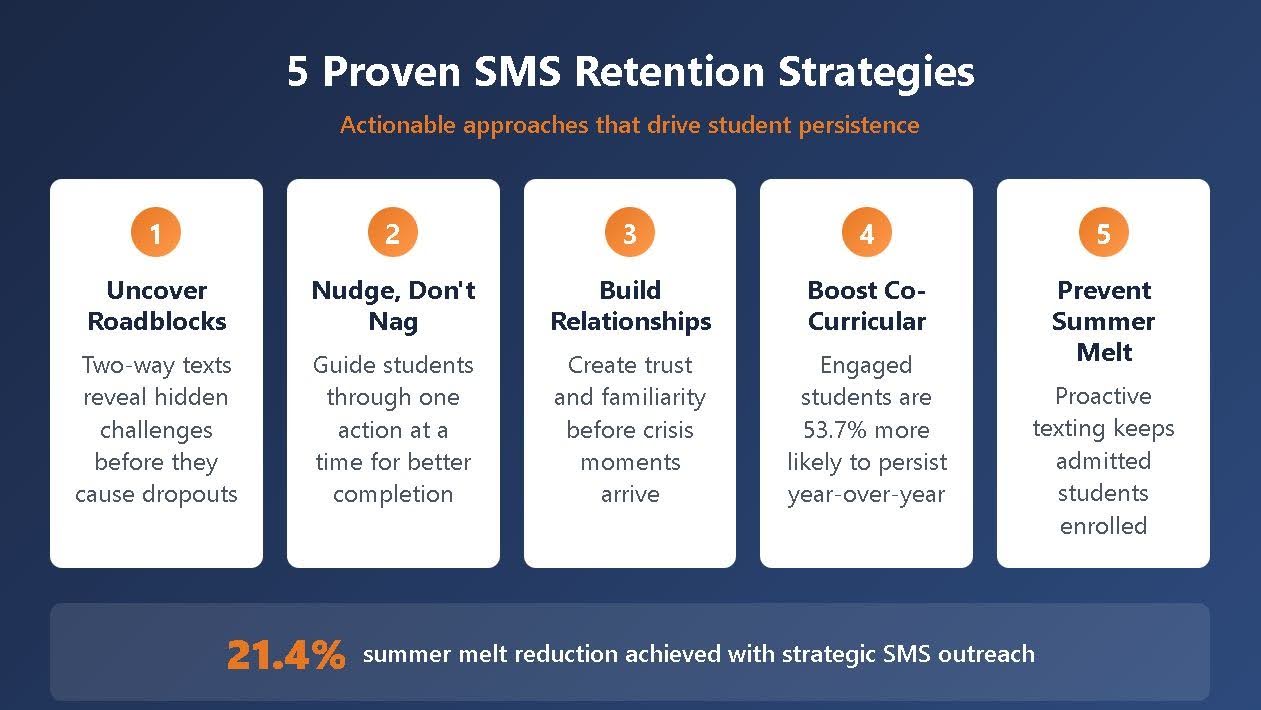
These five approaches to implementing texting consistently produce measurable retention improvements across institution types.
Uncover roadblocks through conversation. The power of two-way messaging lies in discovery. When students reply to texts, they reveal challenges that might otherwise remain hidden until too late. A student who mentions they can't afford textbooks needs different support than one struggling with course content. By asking the right questions, advisors can customize guidance and connect students with specific resources. A financial concern might lead to scholarship information, emergency funds or on-campus employment opportunities.
Nudge instead of nag. Nobody responds well to lengthy demands. Effective texting trades nagging for nudging, or gently encouraging someone to complete a specific task. Guide students through one action at a time. Once they confirm completion, move to the appropriate next step.
Build relationships before students need help. Students access support services more readily when they already know and trust the people behind them. Texting creates familiarity and comfort before crisis moments arrive. Would you prefer attending an event hosted by "The Office of Student Services" or one planned by Maria, the friendly advisor you've gotten to know through text? Relationships lower barriers to engagement.
Encourage co-curricular participation. Student engagement outside the classroom impacts retention. Harford Community College found that students attending campus co-curricular events are 53.7% more likely to persist through to the next academic year. First-year Arkansas Tech University students recording at least one hour of community service have a 94% retention rate. Texting amplifies event promotion and simplifies participation tracking.
Prevent summer melt proactively. The period between acceptance and enrollment remains perilous. According to research, 10–20% of high school seniors who are admitted to college and indicate intent to attend never show up for classes. Georgia State University's pioneering Pounce texting program achieved a 3.9% enrollment increase and 21.4% reduction in summer melt through strategic student engagement during those critical months.
How Are Institutions Using Texting to Prevent Summer Melt?
Summer melt deserves particular attention, given recent challenges in higher ed. The 2024 FAFSA redesign, intended to simplify financial aid access, instead created widespread confusion and processing delays. FAFSA completion rates dropped 11.6%, with just 46% of high school seniors completing the form by the end of June. Students from low-income communities, who depend most heavily on financial aid to make enrollment decisions, faced the greatest uncertainty.
These circumstances intensified summer melt risks. When students can't confirm their financial aid packages, they hesitate to commit. When paperwork deadlines create confusion, some students simply opt out rather than navigate the complexity. Texting provides a lifeline during this vulnerable period.

Institutions can effectively prevent summer melt by using SMS to provide:
- Deadline reminders delivered with enough lead time for action
- Step-by-step guidance through complex forms
- Quick answers to questions that might otherwise derail progress
- Encouragement that maintains student excitement about starting college
The immediacy of texting matters during summer months when school-based counselors aren't available. Students completing FAFSA verification or resolving registration holds need support within hours, not weeks. Institutions that maintain responsive text communication throughout the summer see measurably better enrollment outcomes.
Frequently Asked Questions:
What response rate should institutions expect from student texting campaigns? SMS campaigns in higher ed typically achieve response rates around 45%. Actual results vary based on message relevance, timing and personalization quality. Institutions that use segmented, conversational approaches often exceed these benchmarks.
How does texting comply with FERPA regulations? Purpose-built higher ed texting platforms include FERPA safeguards that limit the sharing of sensitive student information, implement proper access controls and maintain audit trails. Institutions should verify compliance features before selecting any communication platform.
Can texting replace email communication entirely? Texting works best as part of a multi-channel communication strategy rather than a complete email replacement. Email remains appropriate for long-form content, official documentation and communications with detailed attachments. Texting excels at time-sensitive notifications, quick questions and relationship-building exchanges.
How do you measure the ROI of student texting programs? Key metrics include response rates, task completion rates, retention improvements among texting participants versus non-participants and reduction in summer melt. Many institutions also track staff time savings from automation and student satisfaction scores related to communication quality.
Creating Connection Through Every Message
Retention ultimately depends on students feeling supported, valued and connected to their institution. Communication tech serves that goal by enabling personalized, timely, responsive outreach at scale. When texting supports retention, students receive the right information at the right moment through the channel they actually use.
Institutions that implement comprehensive SMS retention strategies see improvements across the metrics that matter most. Higher persistence rates, stronger student satisfaction and better graduation outcomes all follow from treating communication as a core component of student success infrastructure.
Modern Campus provides AI-powered conversational messaging designed specifically for higher ed's unique needs throughout the entire learner-to-earner lifecycle. With purpose-built solutions that blend automated efficiency with authentic human interaction, institutions can transform how they connect with students from enrollment through graduation and beyond. Request a demo to see how strategic texting can strengthen your retention outcomes.
Last updated: April 10, 2026
Related Blogs
Blog
New Research Shows How High School Students Actually Choose College in 2026
Insights from the 2026 College Planning Report, conducted by Modern Campus in partnership with Encoura and Ruffalo Noel...

Blog
4 Keys to Engaging the Modern Learner in Higher Education
Learn 4 proven strategies for engaging the modern learner in higher ed. Discover how AI, personalization and flexible...

Blog
Higher Ed Has Reached a Structural Turning Point: Six Insights from Phil Hill
Higher ed is at a structural turning point. Explore six insights from Phil Hill on enrollment, ROI, Workforce Pell and...