Students expect more than a diploma. They want clear connections between their education and meaningful careers, and career pathways software is helping institutions deliver exactly that. Here's what you need to know:
-
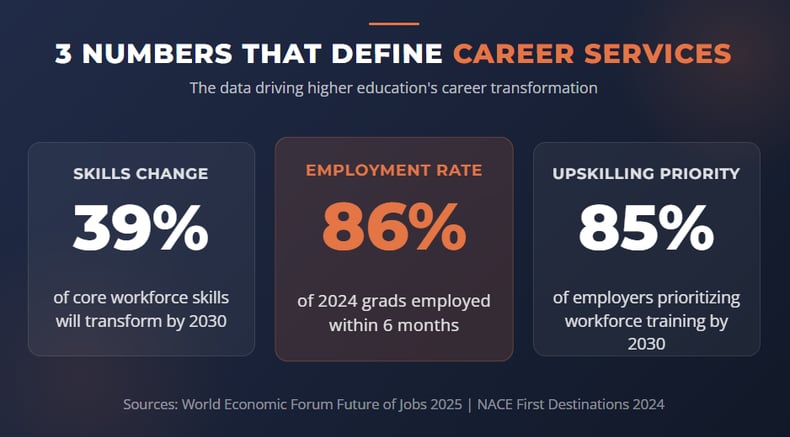
39% of core workforce skills will change by 2030, making real-time labor market alignment essential for student success.
-
AI-powered career tools are scaling personalized guidance, enabling career centers to serve more students without adding headcount.
-
Virtual career fairs and hybrid recruiting models are expanding access, particularly for non-traditional and working learners.
-
Institutions that connect academic programs to career outcomes see measurable gains in enrollment, retention and graduate employment rates.
If your career services strategy still relies on static job boards and annual career fairs, you're leaving students behind.
Students today are asking outcomes-driven questions before they ever set foot on campus. Will this degree lead to a job? What will I earn? How long until I see a return on my investment? Employers expect 39% of core workforce skills to change by 2030. That level of disruption means the career guidance students received even five years ago may already be obsolete.
Higher ed professionals tasked with preparing students for careers that don't yet exist face both a challenge and an opportunity. The institutions that embrace career pathways software and emerging job placement technologies are positioning themselves to meet student expectations while demonstrating the tangible value of their programs. Those that don't risk watching enrollment decline as prospective students gravitate toward institutions that can clearly articulate their career outcomes.
This blog explores the five major trends reshaping higher ed career services and offers practical guidance for institutions ready to modernize their approach to career planning for students.
What Is Career Pathways Software and Why Does It Matter for Higher Education?
Career pathways software offers a new way to connect academic programs to employment outcomes. Rather than treating career services as an afterthought tucked into a corner office, these platforms integrate labor market data, skills mapping and personalized guidance directly into the student experience.
Career services’ traditional model relies heavily on one-on-one counseling sessions, printed job postings and periodic career fairs. While these touchpoints remain valuable, they can't scale to meet the needs of diverse student populations. Working adults juggling jobs and families, first-generation students unfamiliar with professional networking and remote learners who never set foot on campus all need career support that fits their lives.
Career pathways software makes career exploration self-service, data-driven and continuously available. When a prospective student lands on an academic program page, they can immediately see salary projections, job growth trends and the specific skills employers are seeking. This transparency builds trust and helps students make informed enrollment decisions. For enrolled students, the same technology can clarify their path to graduation while keeping career outcomes front and center throughout their academic journey.
How Is AI Transforming Career Planning for Students?
Artificial intelligence is becoming essential infrastructure within higher ed career services. The transformation is affecting multiple components, and institutions that ignore these developments risk falling behind peers who embrace them.
AI-Powered Career Assessments and Matching
Traditional career assessments ask students a static set of questions and provide a predetermined list of career matches. On the other hand, AI-powered assessments analyze student responses in real time, ask follow-up questions to drill deeper into interests and aptitudes and continuously refine recommendations based on new information.
The result is career guidance that feels less like filling out a form and more like having a conversation with a knowledgeable advisor. Students receive personalized insights that account for their unique combination of skills, interests and circumstances. For career centers stretched thin by limited staffing and growing student populations, AI assessments extend capacity without sacrificing quality.
Intelligent Resume Review and ATS Optimization
The disconnect between how students write resumes and how employers screen them has long frustrated career counselors. Students craft thoughtful documents highlighting their experiences only to have those resumes filtered out by Applicant Tracking Systems before a human ever sees them.
AI-powered resume review tools are closing this gap by mimicking the exact screening processes employers use. Students receive immediate feedback on formatting, keyword optimization and content alignment with specific job descriptions. AI use in career centers has grown to 76%, reflecting recognition that these tools deliver measurable improvements in student outcomes.
Predictive Analytics for Career Success
AI enables career services leaders to spot trends, identify at-risk students and demonstrate ROI to leadership. Predictive analytics can flag students who haven't engaged with career resources, enabling proactive outreach before graduation looms. The same technology can track which programs produce the strongest employment outcomes, informing curriculum decisions and marketing strategies.
What Role Do Virtual Career Fairs Play in Modern Higher Ed Career Services?
Virtual career fairs have become a strategic advantage for institutions serving diverse student populations. A 2025 Inside Higher Ed Student Voice Survey found:
-
38% of students want their college to help them find paid internships
-
30% want stronger connections with potential employers
Virtual events remove barriers that prevent many students from accessing these opportunities.
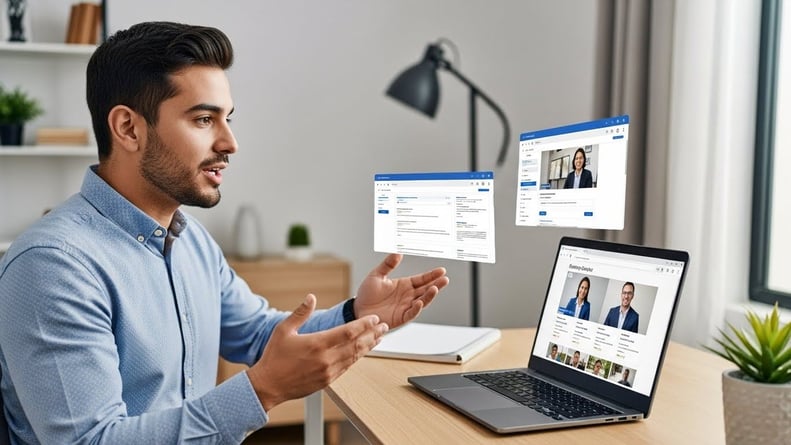
Consider the challenges facing a working adult enrolled in an evening program. Traditional career fairs scheduled during business hours are inaccessible. Online students studying from different time zones face similar obstacles. Virtual career fairs eliminate geographic and scheduling constraints, allowing students to connect with employers from anywhere at times that fit their lives.
The data supports continued investment in virtual recruiting. Hybrid models combining in-person and virtual events are becoming the standard, with employers increasingly comfortable conducting initial screening conversations through video platforms. Students gain access to opportunities that would have been geographically impossible just a few years ago.
Institutions maximizing the value of virtual career fairs are integrating these platforms with their career pathways software to capture engagement data, recommend relevant employers to students based on their profiles and track outcomes from initial conversations to job offers. This connected approach transforms career fairs from isolated events into components of a comprehensive student engagement strategy.
Why Is Real-Time Labor Market Data Essential for College Career Pathways?
The gap between academic program development and labor market reality has frustrated employers and disappointed graduates for decades. Curriculum changes move slowly through faculty governance processes while employment trends shift rapidly. By the time a new program launches, the job market it was designed to address may have already evolved.
Integrating real-time labor market data keeps career guidance current without requiring constant manual updates. When the Bureau of Labor Statistics releases new employment projections or salary data shifts in a particular region, that information automatically flows into career pathways platforms. Students see accurate, timely information rather than snapshots that may already be outdated.
This capability matters enormously for student retention. When students can clearly see how their coursework connects to employment outcomes, they're more likely to persist through challenging moments. The abstract promise of a degree becomes concrete when students can point to specific job titles, salary ranges and growth trajectories tied to their academic program.
Labor market data also enables institutions to identify emerging opportunities before competitors. Skills-based hiring continues gaining momentum. The World Economic Forum notes that 85% of employers plan to prioritize workforce upskilling by 2030, signaling sustained demand for credentials that develop specific, verifiable competencies. Institutions monitoring these trends can launch certificate programs and microcredentials aligned with employer needs, capturing market share in growing fields.
5 Key Trends Reshaping Job Placement Technologies in Higher Education
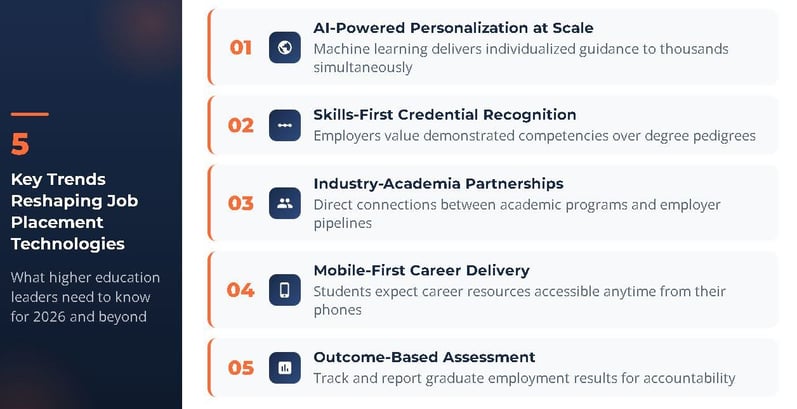
How institutions approach college career pathways is evolving. Here are the five most impactful trends higher ed professionals should watch:
-
AI-powered personalization at scale. Machine learning algorithms allow career centers to simultaneously deliver individualized guidance to thousands of students, moving beyond generic advice to recommendations tailored to each student's unique profile.
-
Skills-first credential recognition. Employers increasingly care about demonstrated competencies rather than degree pedigrees. Career pathways platforms that help students articulate and verify specific skills will gain an advantage as this shift accelerates.
-
Industry-academia partnerships. Direct connections between academic programs and employer hiring pipelines are becoming essential. Institutions embedding industry input into curriculum design and career services see stronger enrollment outcomes.
-
Mobile-first career services delivery. Students expect to access career resources from their phones with the same ease they order food or hail rides. Platforms designed for desktop-first experiences are falling behind mobile-native solutions.
-
Outcome-based program assessment. Accreditors, state legislators and prospective students all want evidence that programs deliver employment results. Institutions unable to track and report graduate outcomes face growing accountability pressure.
How Can Institutions Align Career Services with Industry Demands?
Creating meaningful connections between academic programs and employer needs requires intentional effort across multiple institutional functions. Career services can't accomplish this alignment alone. It requires collaboration among faculty, academic affairs, institutional research and external partners.
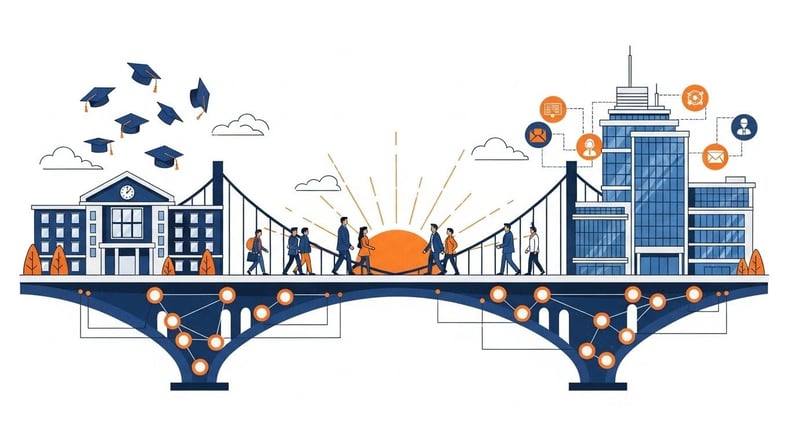
Curriculum alignment starts with listening. Institutions that convene advisory boards bringing together employers, alumni and career services professionals gain invaluable insight into shifting skill demands. These conversations should happen regularly, informing not just career guidance but also course content and program development.
Work-integrated learning pathways are another critical alignment strategy. Internships, co-ops and apprenticeships give students hands-on experience while helping employers identify potential hires. Students who complete experiential learning programs achieve higher career satisfaction and stronger starting salaries than peers who don't. Institutions that make these experiences accessible and well-supported see benefits in both student outcomes and employer relationships.
Technology platforms that surface career data on program pages provide passive alignment by ensuring students always see current employment information connected to their academic choices. This transparency builds trust with prospective students while keeping career outcomes visible throughout the student journey.
Frequently Asked Questions
What features should institutions look for in career pathways software? Priority features include:
-
Real-time labor market data integration
-
Seamless embedding into existing web infrastructure
-
Personalized career exploration tools
-
Analytics dashboards for tracking student engagement
The platform should require minimal technical maintenance while automatically keeping information current.
How can smaller institutions implement AI-powered career services with limited budgets? Start with focused implementations that deliver immediate value. AI-powered resume review tools and chatbots handling routine questions can extend staff capacity without major investment. Many career pathways platforms offer scalable pricing that makes sophisticated features accessible to institutions of all sizes.
What metrics should career services leaders track to measure success? Key metrics include:
-
First-destination employment rates
-
Time to employment
-
Salary outcomes by program
-
Student engagement with career resources
-
Employer satisfaction with graduate preparation
Tracking these metrics over time enables continuous improvement and demonstrates ROI to institutional leadership.
Preparing Your Institution for the Future of Career Services
The trends reshaping higher ed career services share a common thread: student expectations are rising while resources remain constrained. Institutions that thrive will leverage technology to scale personalized guidance, integrate career outcomes data throughout the student experience and build genuine connections between academic programs and employment opportunities.
The 86% of bachelor's degree graduates from the Class of 2024 who secured employment or continued education within six months of graduation come from institutions that are getting this right. Behind those outcomes are career pathways software, proactive career counseling and intentional alignment between curriculum and labor market needs.
Modern Campus helps institutions deliver the career outcomes students demand. Our career pathways platform integrates real-time labor market data with intuitive exploration tools, enabling students to connect their academic choices to meaningful employment outcomes.
Request a demo to see how we can help your institution prepare learners for lifelong career success.
Last updated: February 11, 2026
.png)