While we want to look at the redesign of tracking grades, now we’re tracking careers.
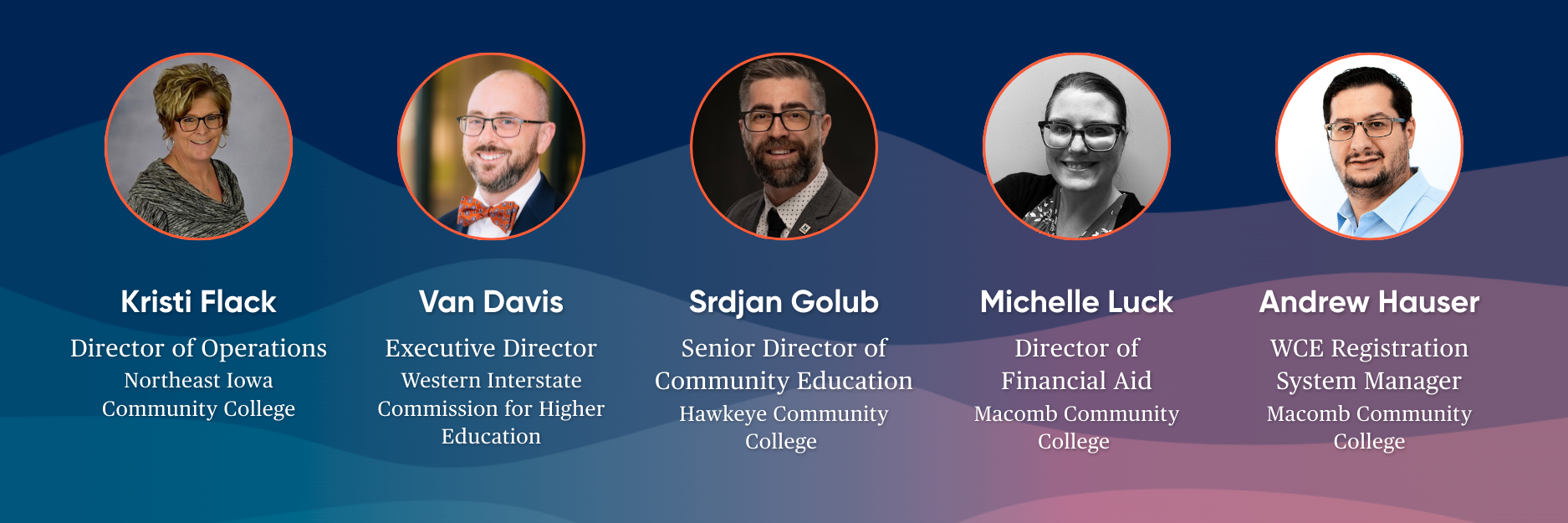
Kristi Flack Director of Operations, Northeast Iowa Community College
As Workforce Pell moves from policy to practice, institutions are facing a pivotal moment that will test their ability to support short-term, outcomes-driven programs with the same rigor and accountability as traditional academic pathways.
This represents a historic opportunity to unlock new federal aid, but success hinges on a fundamental shift: turning compliance into a strategic imperative.
Scheduled to take effect on July 1, 2026, Workforce Pell expands federal Pell Grant eligibility to short-term programs designed to prepare learners for in-demand careers. To qualify, programs must meet strict criteria on:
-
Program length (150–599 clock hours over 8–15 weeks)
-
Measurable outcomes (completion, job placement and post-program earnings)
-
Labor-market alignment (for high-skill, high-wage, in-demand occupations)
-
Program maturity (offered for at least one year with outcomes data)
-
State approval (validated through state workforce governance)
These requirements expose a growing gap between policy expectations and the operational reality many institutions face.
In Modern Campus’s Community Conversation on Workforce Pell Readiness, leaders from continuing education, workforce development, financial aid and policy shared how their institutions are preparing and where challenges are emerging.
From Short-Term Training to Long-Term Strategy
Workforce Pell is pushing institutions to rethink workforce programs as integral parts of the complete learner journey. These programs will no longer be treated as siloed offerings, but stackable components of a broader continuum toward credential attainment and employment outcomes.
This shift requires institutions to manage short-term learners as part of a lifelong relationship, not a one-time transaction.
“Rather than focusing on filling single seats in a class, we’re now really focusing on the short-term learner as a long-term student in a degreed pathway,” says Kristi Flack, Director of Operations at Northeast Iowa Community College.
Workforce Pell policy reinforces this shift by redefining what success looks like for short-term programs, raising expectations for how institutions design pathways and support learners beyond the classroom.
“We must now track students into the workforce with the same rigor that we’ve tracked them with graduation rates,” says Flack.
Outcomes Are No Longer Optional
One of the clearest departures from traditional Pell aid practices is the requirement to tie eligibility not just to enrollment and completion, but to verified post-program outcomes.
Under Workforce Pell, eligible programs must demonstrate:
-
A ≥70% completion rate, measured within 150% of normal program time
-
A ≥70% job placement rate within 180 days of completion
-
Earnings that exceed the cost of tuition and fees
Institutions can no longer rely on disconnected tools or manual processes to track completion, placement and earnings. Outcomes must be verifiable, consistent and defensible across programs and reporting environments.
“Institutions have done a good job tracking completions,” says Van Davis, Executive Director at Western Interstate Commission for Higher Education. “The challenge is going to be tracking ongoing placement not only for internal records, but also for state government so that they can validate the earnings value of the credential.”
This emphasis on employment outcomes reflects the statute’s core intent: funding programs that deliver economic value by aligning training with current labor market demand.
“It’s going to mean working with the IR department, providers, employers and state government,” adds Davis. “This is an incredible opportunity, but I also think it’s a very large lift for a lot of institutions that aren't used to doing this.”
Program Design Has Real Constraints
Institutions aren’t simply deciding which programs qualify. Many are weighing whether eligibility requirements justify fundamental changes to programs deemed successful by other metrics.
At Hawkeye Community College, Senior Director Srdjan Golub emphasized the risk of reshaping workforce programs purely to satisfy policy thresholds: “It’s not fair to add another 60 hours just to meet a requirement. It increases the cost to everybody.”
For institutions deeply connected to employers, program length, pacing and cost are the result of long-standing collaboration with industry partners. Changing them can undermine both affordability and workforce relevance.
This tension underscores a core reality of Workforce Pell: eligibility shouldn’t come at the expense of labor-market alignment or learner value.
Financial Aid Strengthens Cross-Campus Alignment
Workforce Pell’s impact reaches beyond workforce and continuing education divisions, reshaping how financial aid operates across an institution. This level of readiness requires cross-functional coordination.
“We now have a task force run by the president’s office with folks from various sides: academic, workforce, registrar, financial aid…because it’s going to take all of us doing our part,” says Michelle Luck, Director of Financial Aid at Macomb Community College.
Collaboration is crucial as financial aid offices prepare to process funding outside traditional semester structures, tied instead to program length, variable start/end dates and nonstandard enrollment patterns.
Workforce Pell also counts toward a student’s lifetime Pell eligibility, adding another layer of oversight and reinforcing the need for coordinated systems and shared data.
Readiness Lives in Systems and Data
Operational readiness ultimately comes down to data integrity, and how well systems coordinate and adapt.
“Now students have to declare their program upfront so we can track completion and meet that 70% requirement,” says Andrew Hauser, WCE Registration System Manager at Macomb Community College. “Tracking attendance is another priority.”
This level of upfront tracking aligns with federal expectations for verifiable reporting—data that must flow reliably between enrollment systems, registrars and financial aid.
Panelists also acknowledged the added complexity of consolidating data across disparate systems, particularly for short-term, non-credit programs not originally designed for federal aid eligibility.
When Certificates Lead to Careers
Perhaps the most defining theme is the necessity to shift the measure of success.
“We used to measure success by issuing a certificate of completion,” says Flack. “Now we’re measuring value-added earnings, wage growth and whether people are maintaining employment.”
In practice, workforce education is no longer evaluated at the point of completion, but over time in the labor market.
“Our mindset has shifted from being a vendor of training to a co-designer of talent,” adds Flack.
Together, these changes redefine the role of workforce programming—elevating it from short-term training to a central driver of economic mobility and broader social impact.
“A credential can make a difference not just in a learner’s life, but in their family’s life—especially when it leads to a job with a good wage,” says Davis. “If we all figure out the logistical challenges, and I have great faith that we can, we're going to be changing people’s lives.”
The Path Forward
Workforce Pell represents a significant opportunity for funding expansion. But beyond that, it’s driving a structural shift in how colleges serve short-term learners.
Institutions preparing now are building:
-
Shared ownership across workforce programs, academic affairs, financial aid and institutional research
-
Integrated systems and data practices that support auditable outcomes tracking
-
Program strategies that balance federal eligibility with employer relevance and learner value
Institutions will need platforms and partners that support lifelong learning, connect workforce and academic pathways, and turn complex compliance requirements into scalable, learner-centered strategy.
While implementation guidance and state approval processes are still unfolding—and full operational readiness will vary by state and school—the institutions that move first will be ahead of the curve. Now is the time to build the infrastructure that supports both learner success and institutional resilience.
Explore how Lifelong Learning can support your Workforce Pell readiness. Start the conversation today.
📌 Download the Workforce Pell Eligibility & Readiness Checklist to assess where your institution stands.

Last updated: February 13, 2026
.png)